2025 isn’t the year of “AI experiments.”
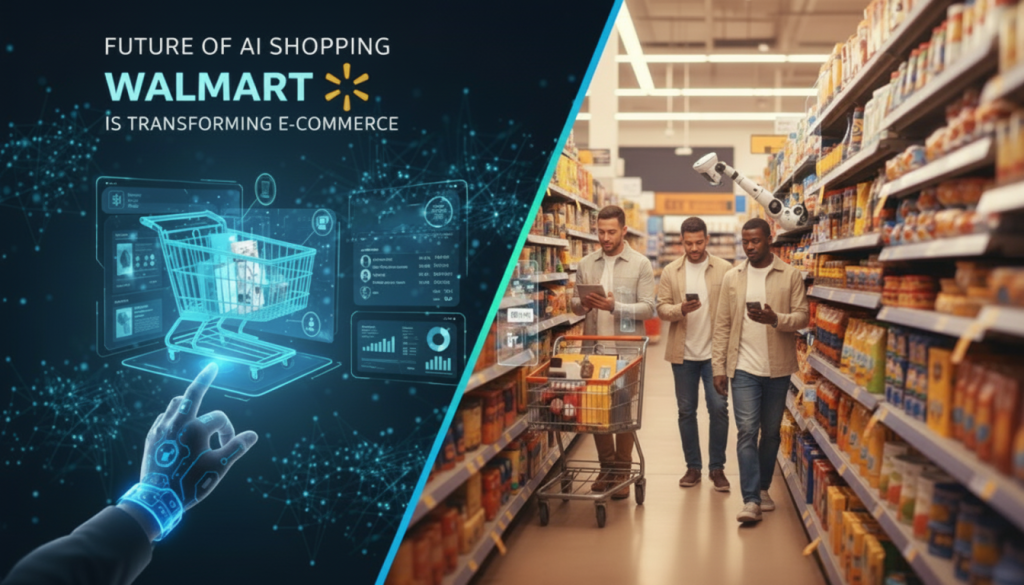
It’s the year AI becomes the default way people shop—and Walmart is leading that transformation.
By integrating ChatGPT directly into its shopping ecosystem, Walmart has created something e-commerce experts are calling agentic commerce. In this new retail environment, AI agents can analyze products, recommend the best options, create bundles, and even complete checkout automatically.
This is not the future of e-commerce.
➡️ This is e-commerce now.
And if you are a marketer, founder, seller, or SEO strategist, this is your blueprint for staying relevant in an AI-first world.
The Shift From Search to Suggestions: AI Is the New Storefront
For over a decade, e-commerce success depended on being found:
- Ranking on page one
- Winning product page clicks
- Optimizing PDPs
- Running ads
But consumer behavior has fundamentally changed:
- People don’t search anymore — they ask
- They don’t browse — they receive AI-curated lists
- They don’t compare — AI compares for them
Walmart’s ChatGPT integration evolves retail from:
❌ “What do you want to buy?”
to
✅ “Tell me the outcome you want. I’ll take care of it.”
Walmart’s AI super-agent can:
- Review thousands of products instantly
- Match results to user goals
- Track budget & price changes
- Build multi-item carts
- Automate checkouts
This isn’t convenience—it’s a new retail channel.
What Is Agentic Commerce (And Why It Will Replace Traditional E-commerce)?
Agentic commerce means AI agents make decisions on behalf of the user.
Here’s how consumers use it:
- “Create a weekly meal plan under $60 and order everything.”
- “Find me a camera under $500 for beginners.”
- “Replace my skincare with cleaner alternatives.”
The AI agent:
✔ Understands intent
✔ Chooses the best items
✔ Compares sellers
✔ Applies deals automatically
✔ Places the order
Unlike old chatbots that simply answered questions, agentic commerce is:
- Autonomous
- Outcome-based
- Personalized
- Fast
Walmart’s partnership with OpenAI accelerates this shift at mass scale.
Zero-Click Shopping: The Silent Traffic Killer of 2026
Zero-click shopping means customers no longer need to open:
- Search results
- Product pages
- Blogs
- Category pages
AI gives them everything instantly—inside one interface.
This creates 3 massive traffic changes:
1️⃣ Organic search traffic for generic queries will collapse
Searches like:
- “best vacuum 2026”
- “best protein powder”
- “How to choose a TV.”
Will be answered by AI interfaces, not websites.
2️⃣ Authority content will dominate
AI engines prefer:
- Real expertise
- Experience-based content
- Brand authority
- Proprietary data
Generic keyword blogs will disappear.
3️⃣ E-commerce visibility depends on “AI recommendation ranking.”
If your product isn’t in the AI agent’s top 3 picks,
You don’t exist.
This is the rise of GEO: Generative Engine Optimization.
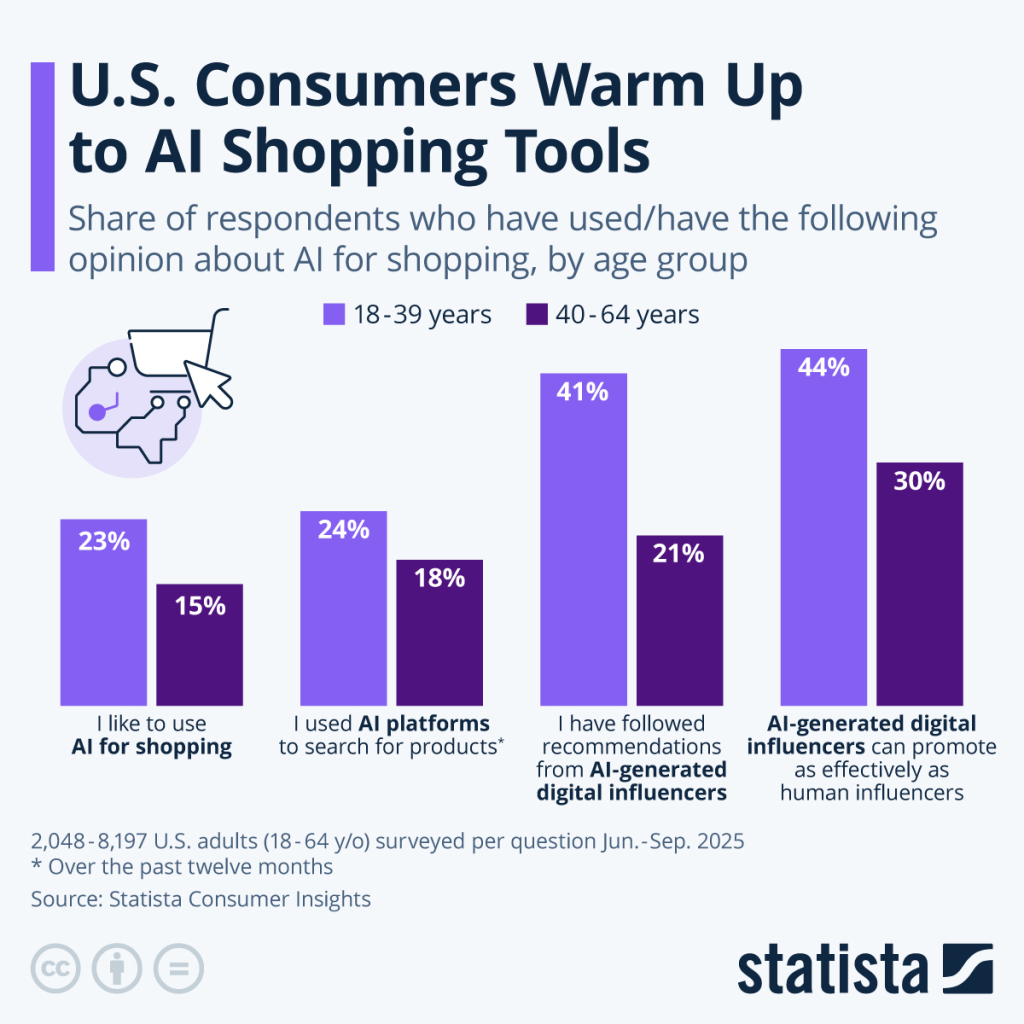
Statista reports that approximately one in five U.S. consumers has already used AI platforms to search for products online, highlighting the rapid influence of AI-driven shopping assistants on e-commerce traffic. (Statista Consumer Insights)
GEO: The New SEO for AI-Driven Shopping
To rank in AI-curated results, brands must optimize for how AI agents read content.
AI prefers content that is:
✔ Outcome-driven
Explain:
- What the product solves
- Who it’s for
- Why is it better than alternatives?
- Real experiences behind it
✔ Structured
AI loves:
- Comparison tables
- Specs
- Pros and cons
- Pricing
- Use-case breakdowns
✔ Experience-rich
AI detects authenticity:
- First-hand insights
- Case studies
- Real usage reviews
- Proprietary research
✔ Fully satisfies intent
Shallow content gets ignored.
Why Walmart’s AI Shopping Expansion Is a Major Threat to Amazon
1. Walmart has massive, diversified product data
Groceries → electronics → pharmacy → home goods.
This gives Walmart more context than Amazon in certain shopping categories.
2. Walmart’s AI is built for “outcome-based shopping.”
It completes multi-step workflows—something Amazon Alexa still does not do fully.
3. ChatGPT integration gives Walmart an edge
The Walmart AI ecosystem can:
- Auto-build carts
- Track budgets
- Forecast needs
- Create bundles
- Simplify complex shopping tasks
This is Walmart’s biggest leap since same-day pickup.
AI Conversational Commerce in 2026
Old conversational commerce = chatbots answering FAQs.
New conversational commerce = full shopping journeys handled by AI.
Example:
User:
“Plan my 8-year-old’s birthday party under $150.”
ChatGPT Shopping:
- Full curated shopping list
- Budget breakdown
- Smart alternatives
- A complete cart ready for checkout
Walmart handles fulfillment automatically.
This is not browsing.
This is end-to-end commerce.
How Brands Can Survive the AI-First Retail Era
🔹 1. Create AI-friendly product pages
Include:
- Specs
- Pros/cons
- Clear pricing
- Use-case explanations
- Comparison insights
🔹 2. Build authoritative buying guides
AI uses these as “data sources.”
🔹 3. Add bundles (AI loves bundles)
Example:
“Home Gym Starter Bundle Under $200”
🔹 4. Produce conversational content
Write using natural human language.
🔹 5. Build brand trust signals
AI boosts:
- Verified reviews
- Certifications
- Expert bios
- First-hand experience
Final Thoughts: E-commerce Has Entered a New Era
Walmart didn’t just adopt AI—
It rewired how people shop.
The new shopping pattern is:
Search → Chat
Browsing → AI-curated lists
Clicks → Zero-click decisions
Discovery → Recommendations
Manual funnels → AI workflows
To stay competitive, brands must adapt:
- Structure your content
- Add expertise
- Build authority
- Optimize for GEO
- Create conversational experiences
This is the new retail battlefield.
And Code and Design Group can help you build for the AI-first future.
Frequently Asked Questions
Q1. What is agentic commerce?
Agentic commerce is AI-driven purchasing where autonomous agents curate products, compare options, and place orders on behalf of the customer.
Q2. What is AI shopping?
AI shopping uses tools like ChatGPT to discover products, compare options, and build carts without traditional browsing.
Q3. How does zero-click shopping affect traffic?
It reduces dependency on product pages and blogs since AI answers most shopping-related queries internally.
Q4. How do I optimize for AI-first shopping?
Use structured content, real experience, trust signals, bundles, and conversational writing.
Q5. What is GEO?
GEO (Generative Engine Optimization) refers to optimizing content so that AI models can recommend, summarize, or cite it during conversations.