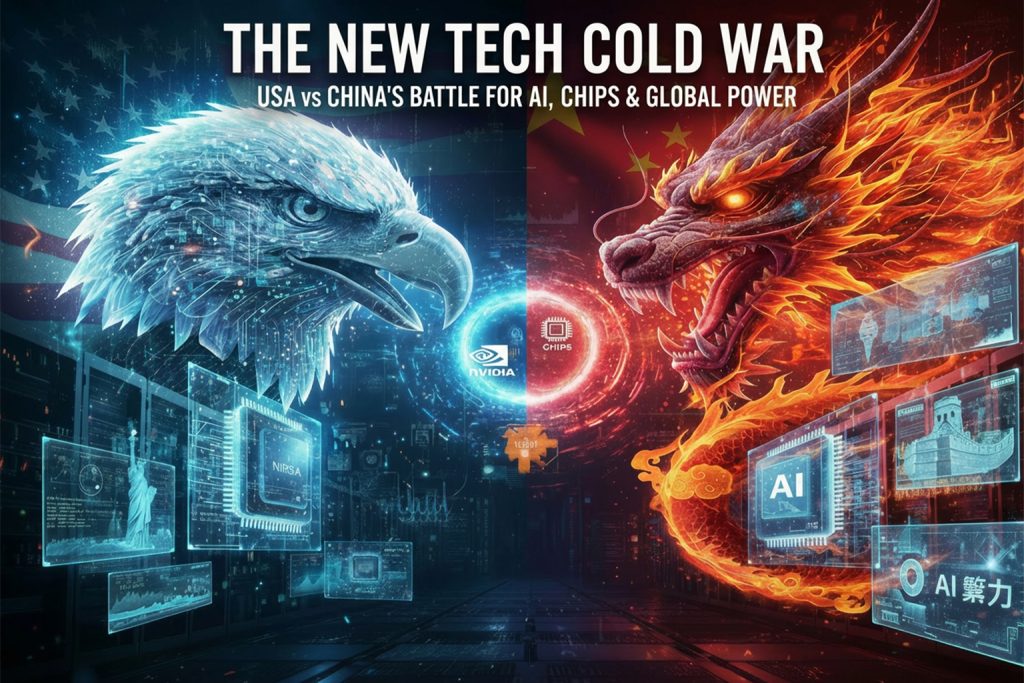
The battle for global technological control has never been more intense. What many once dismissed as simple economic competition has now evolved into a full-scale tech cold war—a clash between the United States and China that is reshaping everything from AI development to semiconductor supply chains, 5G and 6G infrastructure, quantum computing, and national security strategies.
As we move toward 2026, this competition is defining the future of global power.
At the core of this struggle lies one central question: Who will control the technologies that drive the 21st century? The answer will influence military capabilities, economic influence, digital ecosystems, and even cultural soft power worldwide.
Welcome to the USA vs China tech war—a geopolitical showdown fought with algorithms, chips, data, and innovation.
1. How the Tech Cold War Begins: From Cooperation to Confrontation
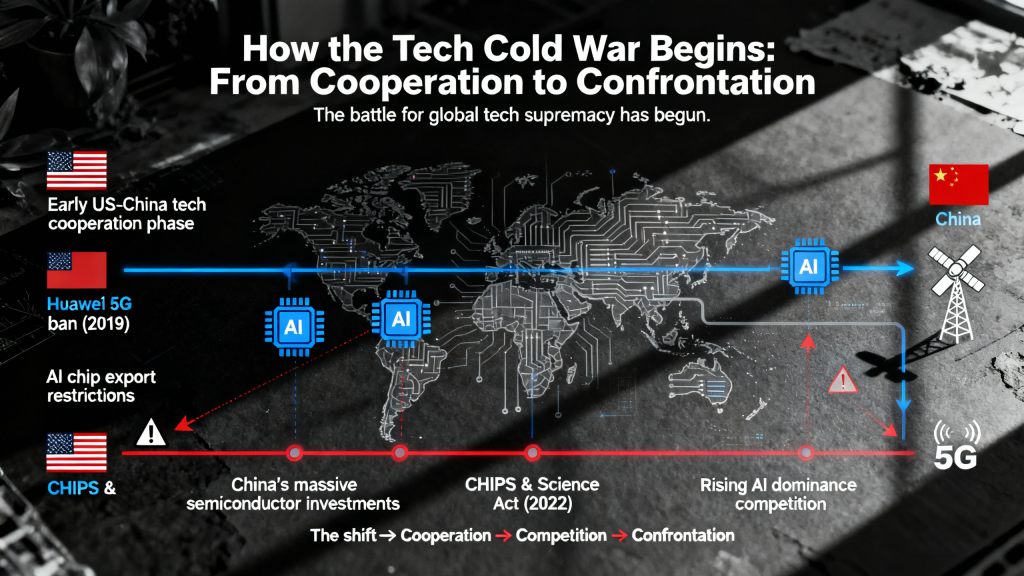
For decades, the U.S. and China maintained a relationship built on mutual economic benefit. The U.S. supplied high-end semiconductors, advanced chip-making tools, and cloud technologies, while China became the world’s largest electronics manufacturer and a significant buyer of technology.
But all things changed when China began investing heavily in becoming a self-reliant tech superpower—particularly in AI, semiconductor manufacturing, and telecommunications.
This shift triggered what analysts now refer to as the global tech war, where innovation isn’t just about market leadership but also geopolitical leverage.
Key turning points included:
- The U.S. is blocking Huawei from 5G networks
- Restrictions on exporting advanced AI chips to China
- The passage of the U.S. CHIPS Act (2022) to rebuild domestic chip production
- China’s heavy investment in AI infrastructure and semiconductor independence
Today, the clash has expanded into every frontier of emerging technology.
Stay Ahead of The Tech Curve
Looking to build AI-powered apps, automate workflows, or strengthen your digital infrastructure?
Code & Design Group helps businesses future-proof their technology with modern, scalable solutions.
Let’s build something powerful together.
2. The US-China AI Race: A Battle for Digital Supremacy
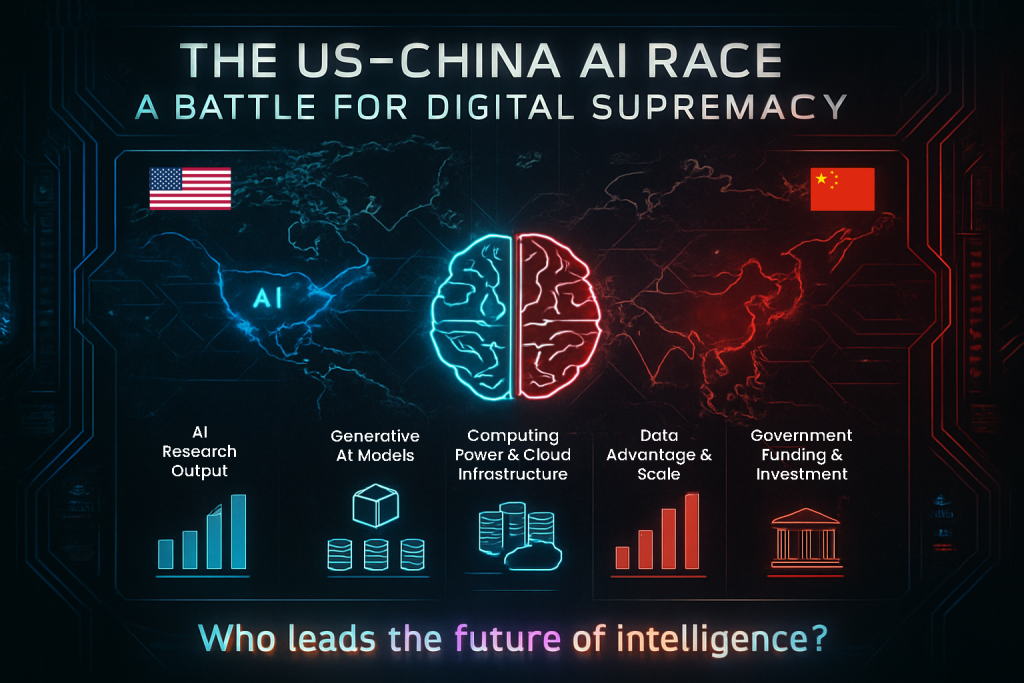
Artificial intelligence has become the centerpiece of the global AI rivalry. AI influences military defense systems, cybersecurity, biotech, manufacturing automation, and international digital platforms.
Where the U.S. Leads
The U.S. currently dominates:
- Frontier generative AI models (OpenAI, Anthropic, Google DeepMind)
- AI research citations and breakthroughs
- Cloud infrastructure powering global AI training
- Access to the world’s most advanced semiconductors
But China is catching up—fast.
China’s Rising AI Power
China has built the world’s largest population-scale datasets, vast computing hubs, and a highly coordinated government strategy for AI leadership. Its leading companies—Baidu, Alibaba, ByteDance, Tencent, and Huawei—are extending China’s generative AI models that are becoming increasingly competitive.
Beijing’s (the capital city of China) massive investment in the AI supercomputing race and national data centers is transforming global expectations of China’s capabilities. Chinese AI models are now powering a huge range of applications, including fintech apps, smart cities, and defense systems. The world is watching the AI dominance: USA vs China battle unfold, with no clear winner yet.
3. The Semiconductor War: The Heart of the Tech Conflict
If AI is the brain of the new digital world, semiconductors are the oxygen. And there is not enough oxygen.
The US-China chip war—often described as the “semiconductor war”—is arguably the most critical front in the entire tech cold war. Both nations are fighting for control over the technology that powers smartphones, AI systems, satellites, drones, quantum labs, and precision-guided military equipment.
Why Chips Matter So Much
Every major technological advancement depends on advanced semiconductors. The nation that leads this race gains unmatched economic and military power.
US Export Controls and China’s Response
The U.S. applied strict export controls on AI chips, blocking companies like Nvidia, AMD, and Intel from selling advanced GPUs to China. These US export restrictions on AI chips aim to slow China’s ability to train large-scale AI models or build advanced weapons systems.
China’s response?
- Massive investment in domestic semiconductor capacity
- Acceleration of Huawei / SMIC chip production in China
- State-backed programs to close the technology gap
- Focus on chip design, lithography engineering, and supply chain decoupling
This has led to the broader phenomenon of tech supply chain decoupling US-China, where companies are increasing their manufacturing to reduce dependency on the other side.
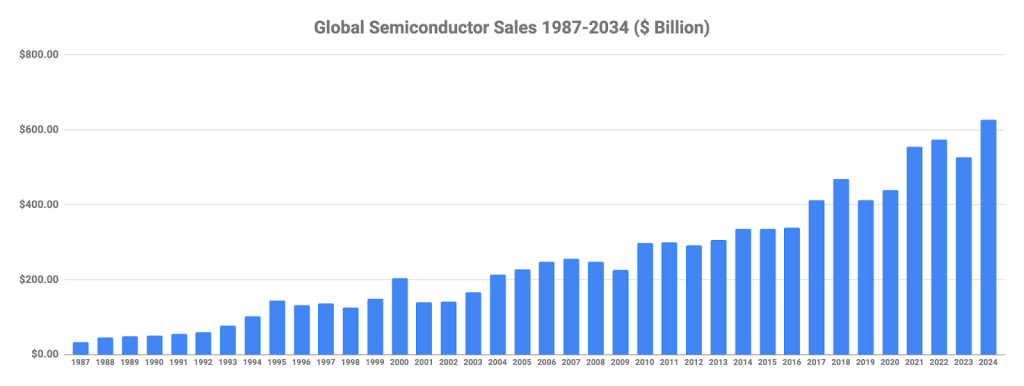
As reported to the Semiconductor Industry Association, global semiconductor sales reached an all-time high of $627.6 billion in 2024 — a 19.1% increase over 2023. This record-breaking growth highlights just how critical chips have become in every part of the digital economy, and it explains why the US-China chip war has escalated into one of the most consequential fronts in the entire tech cold war.
4. China’s Push for Semiconductor Independence
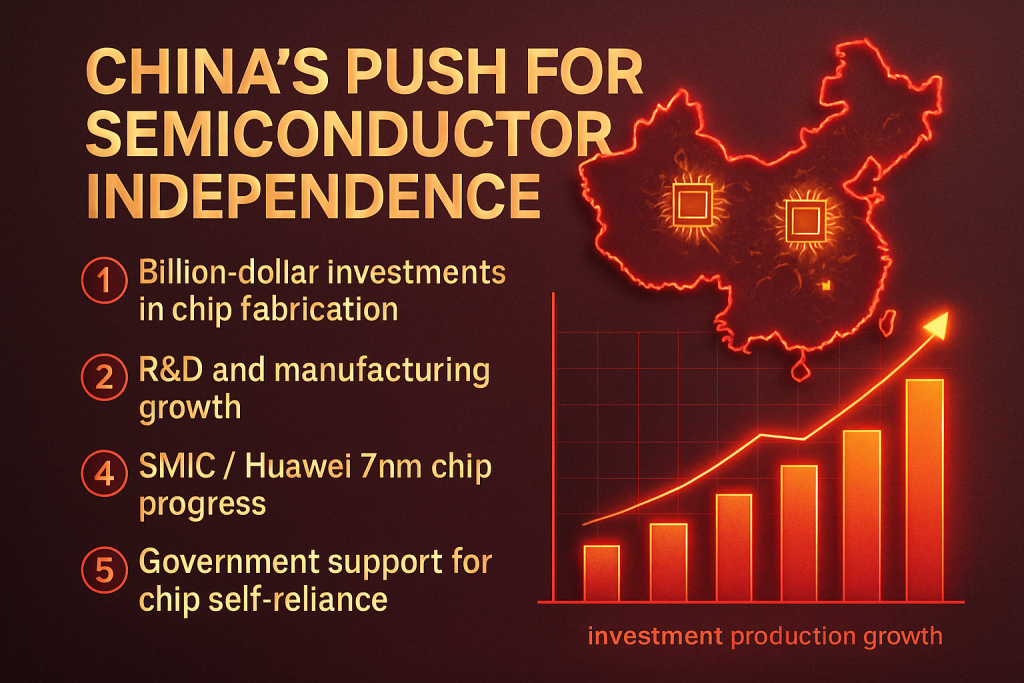
China’s effort to achieve “chip self-sufficiency” has become a nationwide priority. The government is pouring billions into:
- Local chip fabrication plants
- New lithography techniques
- High-bandwidth memory development
- Domestic GPU and accelerator chip R&D
- AI infrastructure investment across provinces
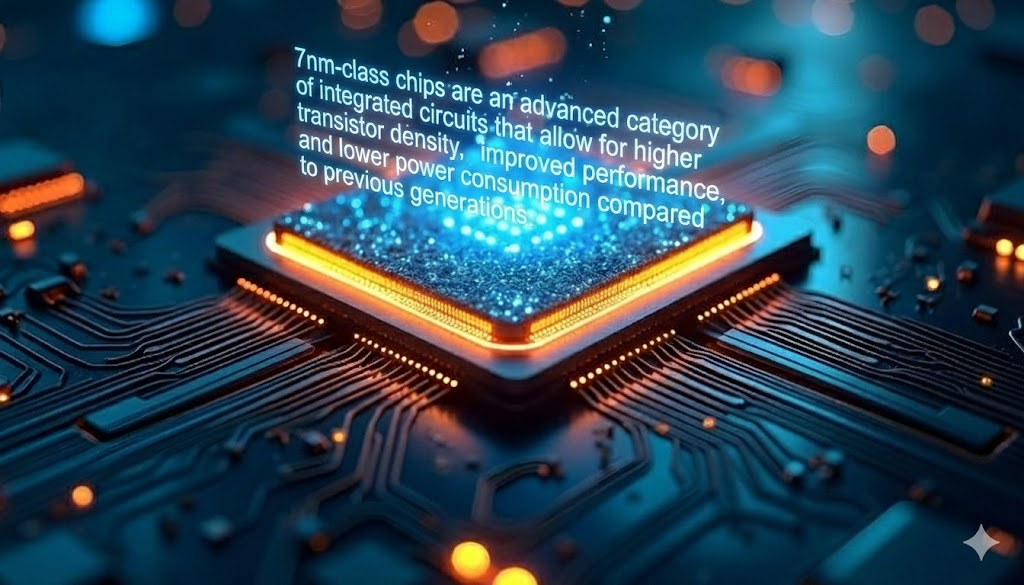
SMIC, Huawei’s chip partner, has already surprised the world by producing 7nm-class chips despite U.S. restrictions. Although still behind Taiwan’s TSMC and South Korea’s Samsung, China is advancing faster than most analysts predicted.
The China tech rise vs USA narrative is no longer hypothetical—it’s unfolding in real time.
5. 5G, 6G, and Infrastructure: The Global Connectivity War
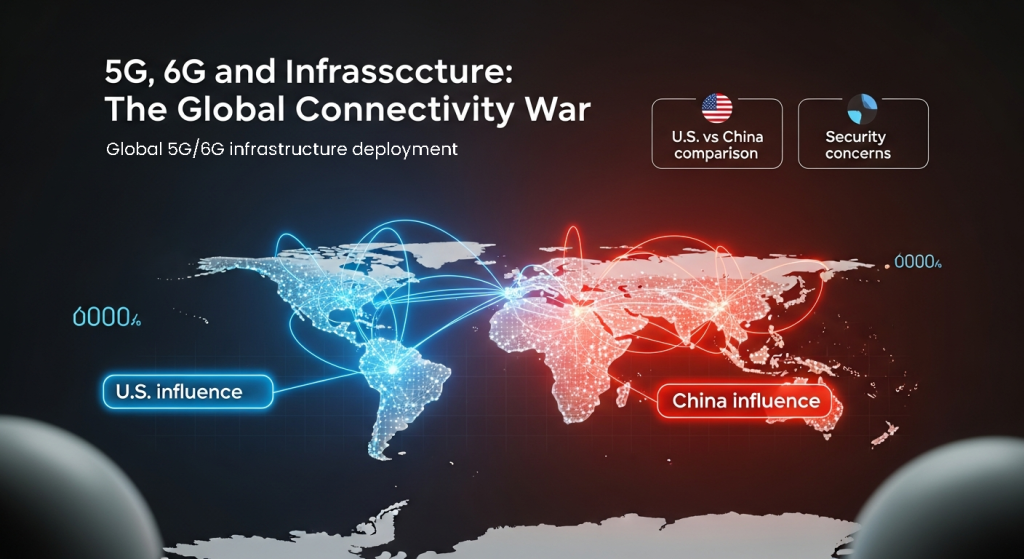
Telecommunications infrastructure is another battlefield of the US-China tech war. China, through companies like Huawei and ZTE, has become the global leader in 5G deployment, prompting concerns about data security, hacking, and geopolitical dependence.
Now the race has shifted to 6G, which promises unprecedented speeds, holographic communication, and advanced satellite-network integration.
Why This Matters
Control over 5G/6G networks influences:
- Global connectivity standards
- Internet governance
- Military communication systems
- Industrial automation
- Global data flows
The 5G/6G infrastructure China-US rivalry will shape how the world connects in 2030 and beyond.
Transform Your Digital Ecosystem
Whether it’s AI integration, custom software, or advanced system architecture, Code & Design Group builds solutions that keep your business competitive in a rapidly evolving tech landscape.
Start your digital transformation today.
6. Quantum Computing: The Next Strategic Battlefield
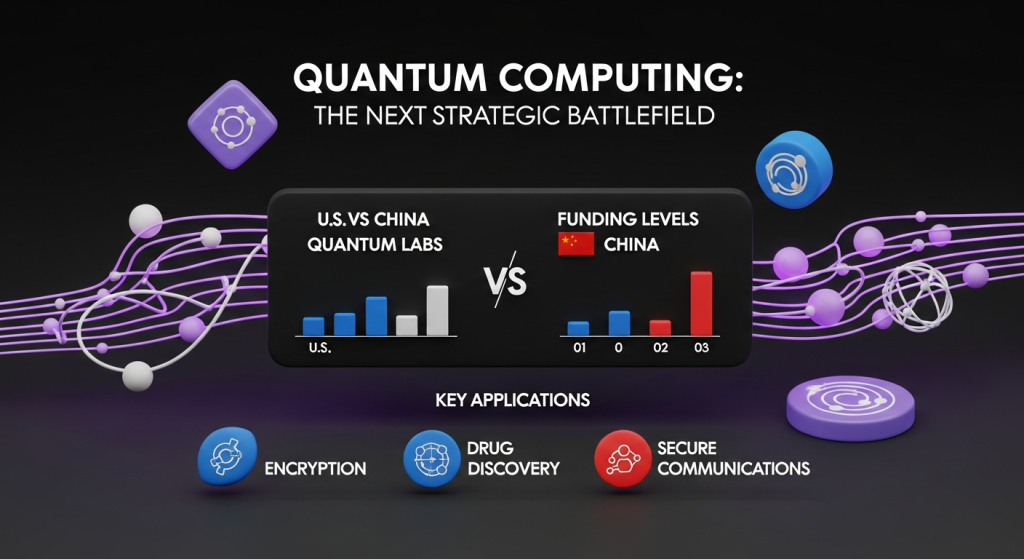
While AI and chips dominate headlines, the quantum computing race US-China is quietly heating up behind the scenes.
Quantum technology has the potential to:
- Break today’s encryption systems
- Unlock new biomedical innovations
- Accelerate drug discovery
- Transform meteorology and climate modeling
- Create unbreakable communication networks
Both nations are investing heavily, with China building multiple quantum labs and the U.S. pushing through research funding programs. The winner of this race could gain an unprecedented strategic advantage in global security.
7. Tech Supply Chain Decoupling: A Fragmented Future
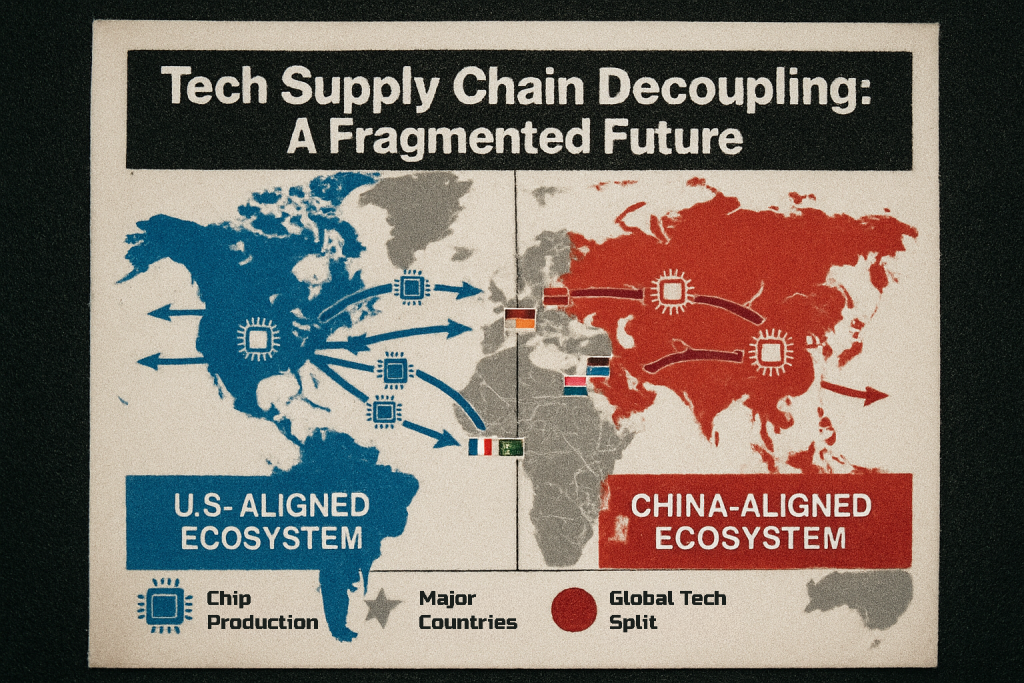
What began as targeted sanctions is now evolving into a comprehensive global semiconductor supply chain realignment. Companies around the world are reevaluating their sourcing of materials, chip fabrication, and product assembly.
What Decoupling Looks Like
- More chip fabs are being built in the U.S., Japan, India, and Europe.
- China is pushing for local alternatives to U.S. technology.
- Global companies are shifting manufacturing away from high-risk regions.
- Governments are offering subsidies for domestic tech production.
This decoupling will likely create two parallel ecosystems:
👉️ A U.S.-aligned tech ecosystem
👉️ A China-aligned tech ecosystem
Some analysts refer to this as the beginning of a separate global tech order.
8. The CHIPS Act and U.S. Strategy for Tech Leadership
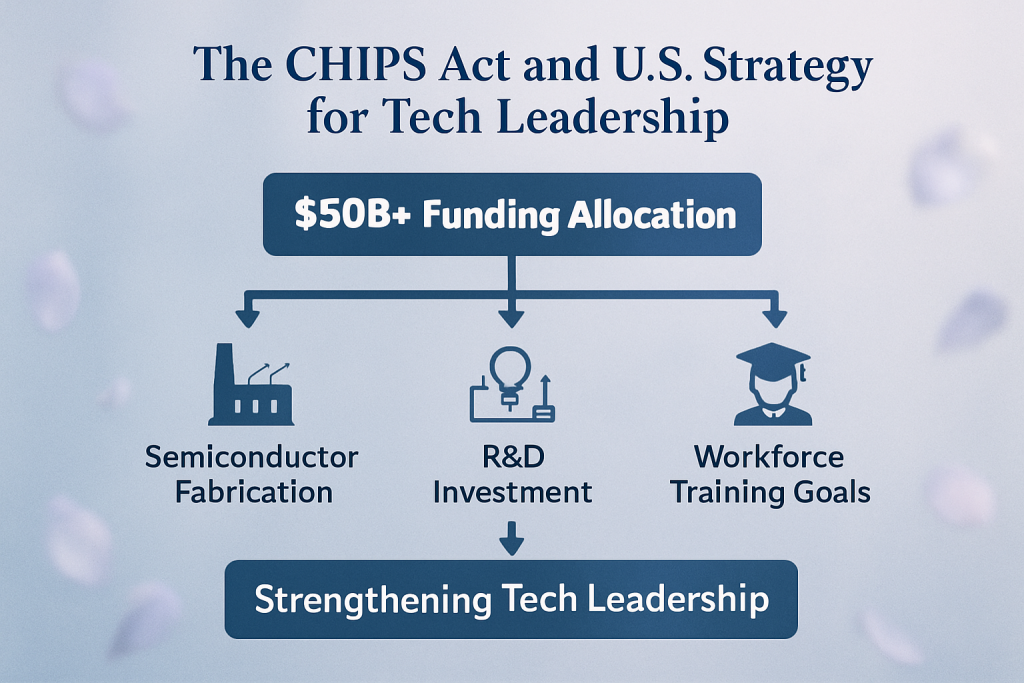
The U.S. CHIPS Act (2022) is one of America’s most significant responses to the U.S.-China chip conflict. With more than $50 billion in funding, the act aims to rebuild chip manufacturing, strengthen supply chains, and enhance national security.
Key goals:
- Bring semiconductor fabs back to the U.S.
- Reduce reliance on East Asian manufacturers.
- Increase domestic R&D.
- Support workforce training in microelectronics.
This is America’s long-term plan to ensure it remains competitive in the 2026 global technology landscape.
9. Global Power Shifts: Who Will Lead in 2026
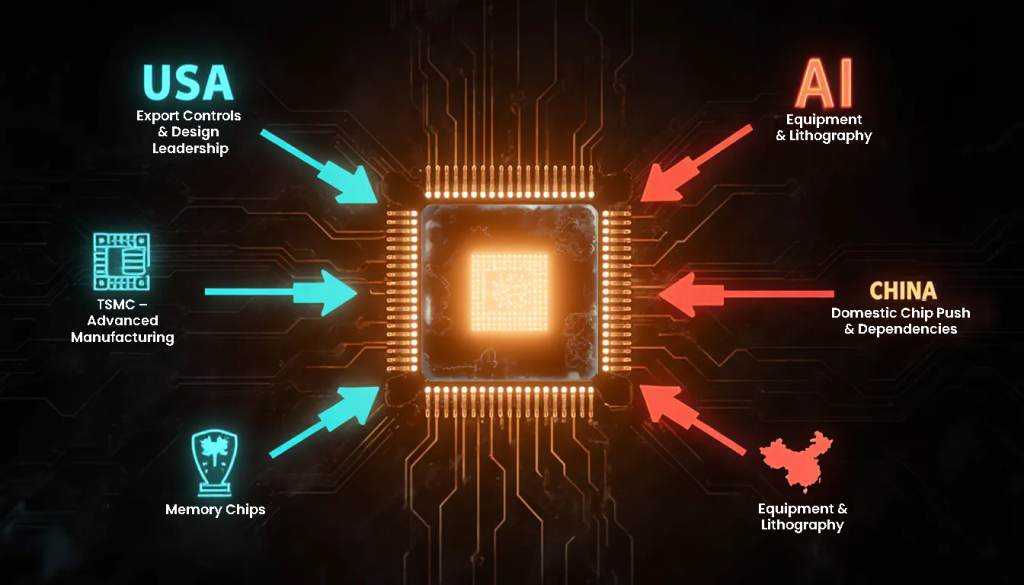
Predicting the winner of the global tech war of 2026 is challenging because both nations have unique strengths.
United States Strengths
- World-leading AI models
- Most advanced AI chips
- Superior semiconductor design
- Strong research universities
- Innovative private sector
- Leading cloud computing platforms
China’s Strengths
- Largest scale in data generation
- Rapid infrastructure deployment
- Centralized long-term planning
- Massive government investment
- Growing domestic semiconductor capability
- Expanding influence in developing countries through tech exports
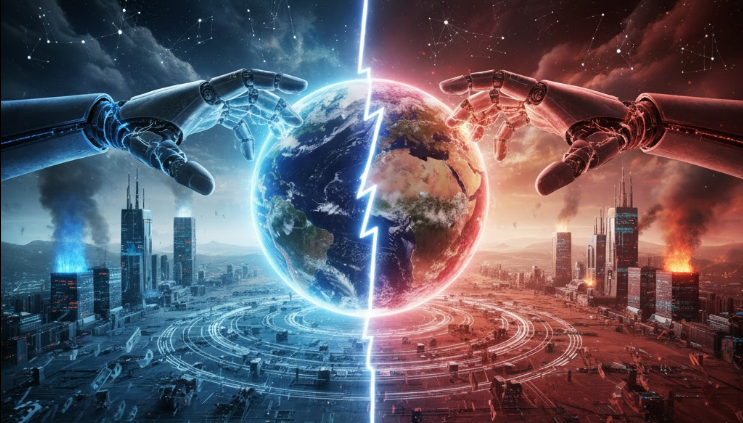
The global AI power struggle is likely to intensify as both nations pour billions into R&D and infrastructure.
10. What This Means for the World
The consequences of the tech cold war extend far beyond Washington and Beijing. Nations everywhere must navigate a divided landscape while safeguarding their own economic and digital futures.
Expect:
- Rising competition for semiconductor partnerships
- Fragmentation of digital standards
- Increased cyber tensions
- More export controls and sanctions
- Expanded surveillance and cybersecurity strategies
- Shifting global alliances based on technological dependence
In other words, the world is entering an era where tech defines geopolitics as much as traditional diplomacy.
💬 Final Thoughts
The confrontation between the U.S. and China is more than an economic competition—it’s a battle for the defining technologies of the next century. Whether it’s AI, chips, telecommunications, or quantum computing, the winner will shape the rules, standards, and systems of the global digital age.
As we approach 2026, this contest won’t slow down. If anything, the USA vs China tech war will become the most consequential geopolitical struggle of our time, influencing economies, militaries, digital rights, and the everyday technologies billions of people depend on. In a world of unpredictable supply chains, your business needs resilient digital systems.
From AI development to full-stack engineering, Code & Design Group delivers solutions you can rely on.
Frequently Asked Questions (FAQs)
Q1. What is the US-China tech war?
The US-China tech war is a competition between the United States and China for control of advanced technologies, including AI, semiconductors, 5G/6G, and quantum computing. It affects global supply chains, national security, and technological standards.
Q2. Why are the U.S. and China fighting over AI?
Both countries want leadership in AI because it determines future economic growth, military power, and digital influence. AI leadership gives an edge in automation, cybersecurity, and innovation.
Q3. What is triggering the Semiconductor war between the US and China?
Far far away, behind the word mountains, far from the countries Vokalia and Consonantia, there live the blind texts. Separated they live in Bookmarksgrove right at the coast of the Semantics, a large language ocean.
Q4. How do U.S. export controls affect China’s AI chips?
U.S. export controls block companies from selling advanced AI chips to China. This limits China’s ability to train large AI models and pushes the country to develop domestic chip alternatives.
Q5. Can China become self-sufficient in semiconductors?
China is improving fast, but full self-sufficiency is challenging. It still relies on global suppliers for advanced tools, but companies like Huawei and SMIC are rapidly expanding domestic chip production.
Q6. Who is leading the global AI race today?
The U.S. currently leads in frontier AI models, research, and advanced chips. China leads in data scale, deployment speed, and government-driven AI infrastructure. The gap between them is narrowing.
Q7. What is the CHIPS Act, and why is it important?
The CHIPS Act is a U.S. law that funds domestic semiconductor manufacturing and research. Its goal is to reduce reliance on foreign chip makers and strengthen national security.